SmoothSend

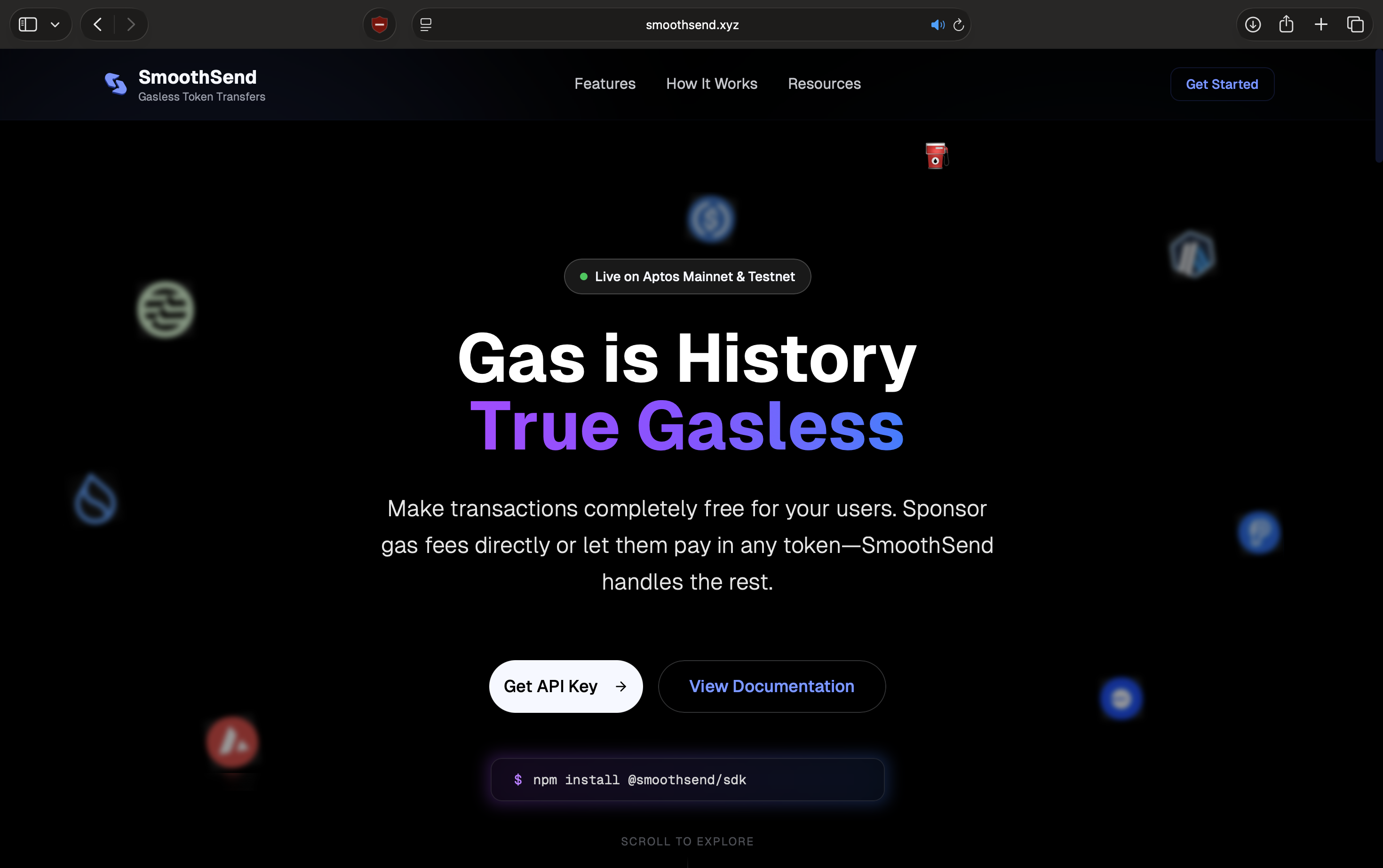
SmoothSend is a production‑ready gasless transaction infrastructure for Aptos dApps. It lets developers offer a “Web2‑simple” experience where users never have to buy or manage APT for gas, while the dApp sponsors fees under a clear, sustainable pricing model. At its core, SmoothSend consists of three pieces: a Cloudflare Worker gateway, a hardened Aptos relayer, and a TypeScript SDK published as @smoothsend/sdk. Instead of calling the Aptos RPC directly, dApps integrate the SDK and route transactions through our gateway. The gateway handles API key auth, rate limiting, usage tracking, and credit‑based billing, then forwards requests to the Aptos relayer, which builds, signs, and submits transactions on behalf of the dApp. On Aptos, SmoothSend supports two integration paths: Wallet Adapter TransactionSubmitter (recommended): A 3‑line drop‑in for @aptos-labs/wallet-adapter-react and @aptos-labs/ts-sdk. Developers create a SmoothSendTransactionSubmitter with their API key and network, plug it into AptosWalletAdapterProvider, and all subsequent signAndSubmitTransaction calls become gasless. This works for any transaction type (DeFi, gaming, NFTs, custom Move modules) without changing business logic. Script Composer (fee‑in‑token): For mainnet flows where the fee should be deducted from the token being sent (e.g. USDC), ScriptComposerClient builds a transaction that bakes in a small service fee (typically MAX(gas × 1.5, $0.01)), returns serialized bytes, and lets the user’s wallet sign. The signed bytes are then relayed and sponsored by SmoothSend. This gives teams flexible monetization while keeping UX gasless. The Aptos relayer is a dedicated service that understands Aptos transaction formats, gas estimation, and sequence numbers. It validates incoming requests, enforces per‑project limits, and submits transactions using relayer keys. Sequence management is centralized in the relayer to avoid conflicts, and all requests must pass through the Cloudflare Worker with a shared X-Gateway-Secret, so the relayer is not exposed directly to the public internet. Developers manage their API keys, usage, and credits through a React‑based dashboard. The dashboard shows real‑time usage stats, request breakdowns, and a credit balance. Billing is credit‑based rather than subscription‑based: testnet is free, and mainnet transactions are charged as MAX(gas × 1.5, $0.01) per tx. This makes costs predictable while still covering the underlying gas and infrastructure. Credits can be purchased in packages with volume bonuses.
Infra


